

A Stylus, Not a Screen, Is Changing the Way Young Children Learn
Researchers have known for years that writing by hand activates the brain differently than typing or tapping. A Japanese-developed learning platform is building an entire curriculum around that idea, starting at age 3.
When researchers studied how children learn to read and write, they kept coming back to one variable: the hand. Not the screen. Not the app. The physical act of forming a letter – the pressure, the direction, the stroke – turned out to matter in ways that simply pointing and tapping did not.
Vanderbilt educational neuroscientist Sophia Vinci-Booher, whose work drew wide attention when published in 2024, found that the slight variability in each handwritten letter – no two quite alike – is actually what helps a child’s brain build a lasting mental model of it; typed letters, uniform and identical every time, don’t create the same effect.
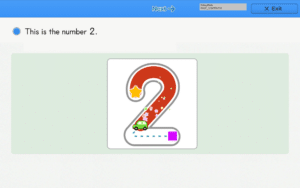
That finding has quietly reshaped thinking in early childhood education, even as the education/tech market has continued to flood classrooms and living rooms with tap-first software. Smile Zemi went a different direction. The Japanese-developed home learning platform, available in the U.S. for Pre-K through Grade 5, is built entirely around a stylus. Children write on the screen. Every lesson, at every grade level, works the same way.
The company recently launched a dedicated Pre-Kindergarten course for children ages 3 and 4: its youngest program yet.
Writing first
The Pre-K curriculum covers seven subject areas: Alphabet, Math, English Language Arts, Science, Social Skills, Thinking Skills, and Art & Music. Children start with basic strokes, the building blocks of letters, before working toward full characters, guided by animations that show stroke direction in real time. Math begins with number sense: counting, ordering, and writing numerals rather than selecting them.
The stylus interaction is the constant throughout. For example, a child writing the number 4 on the Smile Zemi screen is using the same muscle memory they’ll rely on when they pick up a pencil in kindergarten. That is, by design, the point.
The scope of the curriculum is deliberate. Smile Zemi’s Pre-K course is designed so that a child who completes it enters kindergarten already working at roughly a first-grade level — a head start that compounds as children move through the program’s later grades.
No rabbit holes
The tablet runs as a closed system. There’s no browser, no social feed, no unrelated games tucked behind a menu. For parents who have handed a child their device and watched them end up somewhere on the web entirely unrelated to what they started doing, this is not a small thing.
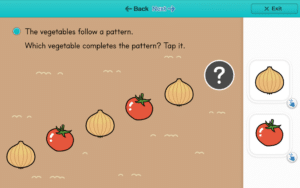
The platform also adjusts to each child’s pace without parent input, looping back when something needs more practice, advancing when a child is ready. For homeschooling families, it functions as a structured daily curriculum that doesn’t require a parent to monitor every session.
Pre-K through Grade 5
The Pre-K launch extends a platform that older children are already using. The same approach – stylus-based interaction, adaptive pacing, closed environment – runs through every grade level up to fifth.
Smile Zemi is an approved ESA vendor in Arizona, and may be eligible to use education scholarship funds toward the subscription.
A 21-day home trial is available. The Pre-K course information is at smile-zemi.com/pk.