
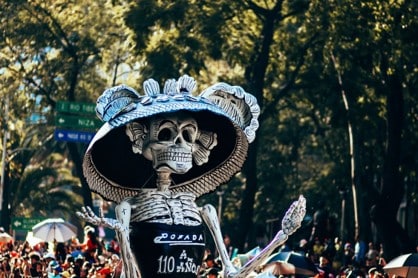
A giant La Catrina puppet towers over a Día de los Muertos celebration crowd. (Photo: Pexels)
A Family Guide to Valley Festivals, Traditions & Kids’ Activities
By Madison Smith
Every family has stories worth remembering. Día de los Muertos offers a beautiful opportunity to share those stories with our children through colorful traditions, meaningful celebrations, and the simple act of remembering those we love.
Across the Valley, families can experience this Mexican tradition through community ofrendas (home alter), music, art, food, and celebrations that honor loved ones who have passed away. Whether you’re introducing your children to Día de los Muertos for the first time or continuing a cherished family tradition, this guide will help you celebrate with understanding, joy, and respect — with six verified local celebrations, a kid-friendly explainer, and ways to bring the tradition home.
Sharing the Tradition: A Kid-Friendly Explainer
Día de los Muertos grows out of the Indigenous traditions of Mexico — including Mexica (Aztec) observances honoring the dead — blended over centuries with the Catholic celebrations of All Saints’ and All Souls’ days. It is a living cultural tradition, not simply an assortment of decorations and festivals, and how families observe it varies by region and household: some build elaborate home altars, others visit cemeteries, many do both. What unites them is the purpose — keeping loved ones present in family memory.
Explaining big concepts like life, passing, and remembrance to young children can be daunting, but Día de los Muertos approaches memory with bright colors, music, and love. Here is a quick breakdown of the key days and symbols:
- November 1: Día de los Angelitos — The Day of the Little Angels, dedicated to honoring and remembering children who have passed away.
- November 2: Día de los Difuntos — The Day of the Deceased, when the remembrance expands to honor adult ancestors, friends, and family members.
- The Ofrenda (Altar) — A beautifully decorated home altar built to welcome the spirits of loved ones back for a brief visit, filled with photos, water, favorite foods, and bright decorations.
- Cempasúchil (Marigolds) — Vibrant orange and yellow flowers whose bright petals and strong scent are believed to create a clear path that guides the spirits back home.
- Calaveras de Azúcar (Sugar Skulls) — Brightly decorated skulls representing the sweetness of life and the unique personality of the person being remembered.
- Papel Picado — Delicate, intricately cut tissue paper banners that symbolize the wind and the fragility of life.
Say it with your kids:
| Traditional Term | How to Say It | What It Is |
| Ofrenda | oh-fren-dah | The beautiful home altar. |
| Cempasúchil | sem-pah-soo-cheel | The vibrant orange marigolds. |
| Calavera | kah-lah-veh-rah | The colorful sugar skull. |
| Papel Picado | pah-pel pee-kah-doh | The intricately cut tissue paper. |
If your little ones are asking questions, you can use a simple, comforting script to explain the holiday:
“Día de los Muertos is a special time when families remember and celebrate people they love who have passed away. We share stories, look at pictures, make their favorite foods, and decorate with beautiful flowers and colors. Sometimes remembering someone makes us smile, and sometimes it makes us miss them. Both feelings are okay. What matters is that we keep their love and memories close to our hearts.”
And if your family has lost someone recently, it’s okay for this season to feel tender. Remembrance can bring big feelings for kids and grown-ups — talking, storytelling, and simply being together are enough.
Halloween and Día de los Muertos sit side by side on the calendar, but they come from different histories and celebrate different things. Halloween is a night of costumes, imagination, and playful scares. Día de los Muertos is a days-long tradition of remembrance, in which families honor real people they have loved with stories, food, flowers, and color. Very different purposes with room for families to enjoy each for what it is.
Read about it together. Two picture books make a gentle first introduction to the holiday:
- Día de los Muertos by Roseanne Greenfield Thong — a joyful rhyming tour of the celebration, from sugar skulls and marigolds to music and cemetery picnics.
- Clatter Bash! A Day of the Dead Celebration by Richard Keep — rollicking and rhythmic, with skeletons who shake, rattle, and roll. A read-aloud favorite.
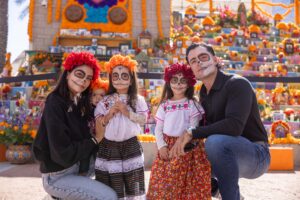
Día de los Muertos Festival at Mesa Arts Center, 2024, photo by Slaven Gujic_116
Six Valley Celebrations for Families
Experience the beauty of these community altars, live mariachi music, and traditional dancing, at six excellent events are happening across the Valley.
| Event & Location | Dates & Times | Cost | Details for Parents |
| Mesa Arts Center (Mesa) | Oct 24–25 — Sat 12–10 PM, Sun 12–5 PM | Free | Features a dedicated sensory-friendly hour from 11:00 AM to 12:00 PM both days — ideal for families looking for a quieter, low-stimulation environment before the main crowds arrive. |
| Mikiztli (Arizona Center, Phoenix) | Oct 24, 4–9 PM | Free | A wonderful downtown cultural festival filled with local art, traditional dances, and vibrant community-built altars. |
| ASU Polytechnic (Mesa) | Oct 29, 4–7 PM | Free | A highly educational, community-centered campus event perfect for introducing children to the historical and cultural roots of the holiday. |
| St. Mary’s Basilica (Downtown Phoenix) | Nov 1, 11 AM–5 PM | Free | Features a beautiful traditional procession and a striking live butterfly release. Families are encouraged to bring a photo of a loved one to place directly on the community altar. |
| Avondale Festival (Goodyear Farms Historic Cemetery) | Nov 7 | Free | A fantastic West Valley option packed with family activities, kid-friendly crafts, food trucks, and live entertainment. |
| Desert Botanical Garden (Phoenix) | Nov 7–8, 12–6 PM | Included with admission | The iconic desert landscape provides a breathtaking backdrop for mega-sized altars, art installations, and musical performances. The community ofrenda is on view Nov 6–9. |
Parking & transit tips:
- For Mikiztli (Arizona Center): Park in the dedicated Arizona Center garage, or take the Valley Metro Light Rail and hop off at the 3rd Street/Washington station to make it a fun train adventure for the kids.
- For Mesa Arts Center: Parking is available in the main MAC lot and along Main Street, but it fills up fast.
Know before you go — the quick parent checklist:
- Sun & heat protection: Even late October in the Valley brings strong sun. Pack hats, sunscreen, and plenty of water bottles.
- Stroller accessibility: Venues like the Mesa Arts Center and Desert Botanical Garden have smooth, wide paths, but crowds during peak hours can make large double strollers tricky to maneuver. Opt for a compact stroller or baby carrier if possible.
- Cash for artisans: While admission to most of these events is free, smaller local vendors selling sugar skulls, face painting, or pan de muerto sometimes prefer cash or have minimum card balances.
- Restrooms & changing stations: Historic locations like St. Mary’s Basilica have limited public restrooms, so plan a stop before you go. Newer venues like Mesa Arts Center and Arizona Center offer modern, family-friendly facilities — check the venue’s website for accessibility and restroom details before you visit.
Parent Pro-Tip: Managing the Sights & Sounds — While these festivals are incredibly joyful, they are also beautifully loud! Traditional celebrations feature live mariachi bands, booming Azteca dancers with ankle rattles, and large crowds. If your little ones are sensitive to noise, consider bringing noise-canceling headphones or planning your visit during the Mesa Arts Center’s sensory-friendly hour (11 AM – 12 PM on Saturday and Sunday).
Pan de Muerto: A Tasting Guide for Kids
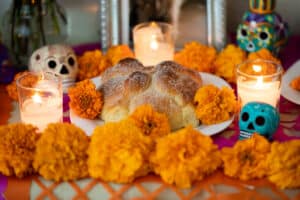
Credit: Marcela Barsse
Food is one of the easiest ways for children to connect with a new culture. Pan de muerto (Bread of the Dead) gives your family a fun “mission” to try together at the festivals:
- What it tastes like: A soft, sweet, brioche-like bread often dusted with sugar and a hint of orange blossom or anise.
- The fun kid detail: The baked dough decorations on top of the loaf aren’t random — they are shaped to look like crossed bones and tears, symbolizing paths of memory. It is meant to be torn apart and shared with family!
Pan de muerto is seasonal — bakeries stock it in the weeks around the holiday — so call ahead to check availability, especially on festival weekends.
Pick some up fresh:
| Valley Panadería (Bakery) | Location | Special Family Highlight |
| La Purísima Bakery | Glendale & Phoenix | Widely considered a Valley favorite for traditional, soft pan de muerto dusted in sugar. Expect a line, but it moves fast! |
| Panadería El Sol | West Valley / Phoenix | Fantastic, authentic selection of sweet breads and kid-friendly mini skull pastries. |
| La Tolteca | Downtown Phoenix | Perfect central stop to grab fresh Mexican hot chocolate mix and pastries before heading to St. Mary’s Basilica. |
Kids’ Activity & Good-Guest Etiquette
Engaging with a culture outside or inside your own household is a powerful way to build empathy and connection in young children. Here is how your family can participate respectfully.
Craft a Shoebox Ofrenda
Building a full-sized altar can be tough if space is tight, but a shoebox ofrenda is a perfect, tactile project for tiny hands.
- The base: Turn a clean shoebox on its side to create a miniature stage or room.
- Decorations: Have your children color and glue mini tissue paper papel picado strings across the top.
- The center: Place a photo or draw a picture of a beloved relative (or even a cherished family pet who has passed away).
- The offerings: Use yellow and orange tissue paper crumpled into balls to mimic marigolds, and use clay or markers to create mini paper plates with drawings of their favorite foods.
A Short Good-Guest Etiquette List
When attending community festivals, keep these simple rules in mind to teach children cultural respect:
- Look, don’t touch: Remind children that home and community altars are sacred spaces. The food, photos, and items placed on them belong to the spirits and the families, so we observe them with our eyes.
- Ask before taking photos: If you see someone dressed in beautiful, intricate Catrina skull makeup or traditional attire, always ask nicely before snapping a photo.
- Support the artists: Many of these festivals are free because of local artisans and food vendors. Buying a traditional sweet bread (pan de muerto) or a handmade craft directly supports the community keeping the tradition alive.
Whether your family attends a Valley festival, shares a piece of pan de muerto, or creates a small ofrenda at home, Día de los Muertos offers something lasting: an opportunity to tell our children the stories of those who came before them. Through those stories, we celebrate the love, traditions, and memories that continue to connect generations.
Save this guide, get your shoeboxes ready — and follow along on Sunday, November 1 for our Grow Sunday post celebrating Día de los Angelitos. Tag us in your photos; we can’t wait to see how your family celebrates remembrance and community this season!
Article submitted by Madison Smith, a local mom who loves reading, writing, exploring community events and spending quality time with her family.