
Brittany Moog, U.S. Swim School Association
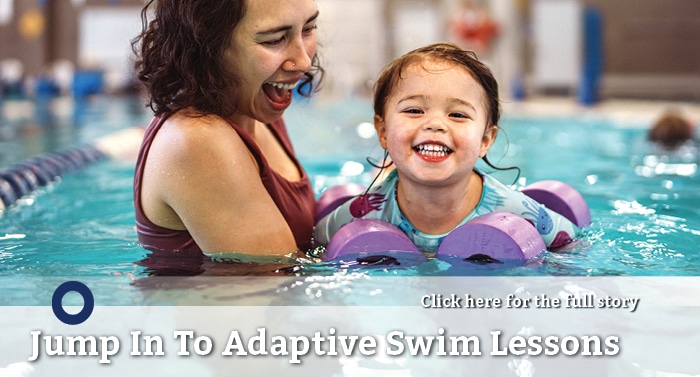
Water safety is essential for all children. But formal swim lessons can be a lifesaving experience for kids with disabilities. While every child benefits from structured instruction, children with disabilities face unique risks and challenges that make specialized swim education even more crucial.
Children with disabilities are statistically at a higher risk for drowning, often due to mobility limitations, sensory differences or difficulty understanding water hazards. Structured swimming lessons help reduce that risk by teaching essential water safety and survival skills in a controlled, supportive environment.
When to start swim lessons for children with disabilities
The American Academy of Pediatrics recommends swim lessons start at the age of one, however, water acclimation can begin much sooner. Parents of kids with disabilities are encouraged to introduce children to the water as early as two months of age. Babies between the ages of eight weeks and six months can enjoy water on their faces and can initiate submersions by themselves as they put their faces and heads in the water.
Many swim schools offer “mommy/daddy and me” style swim class, which allows parents to bond with their child while introducing swim skills in a gentle, developmentally appropriate way before their first birthday. Starting early also gives children with special needs more time for sensory regulation and water acclimation before introducing more advanced skills.
Before stepping into a pool, parents can start to introduce water exposure with simple routines at home like gently pouring water over their child’s shoulders, encouraging play with cups or floating toys in the tub and gradually introducing different water sensations in a fun and safe way.
How swim lessons differ for children with disabilities
Adaptive swim lessons are designed to meet each child where they are developmentally. When looking for a swim program suitable for your child’s special needs, look for an organization that incorporates instruction based on each child’s physical and cognitive abilities, which could mean using visual prompts, tactile cues or calming sensory tools to help a child stay focused and regulated in the water.
Adaptive swimming lessons break down essential water safety skills into manageable, repeatable steps. They focus on things like safe entries and exits, turning to float on the back and breath control, all of which can be the difference between panic and survival in an emergency.
What to look for when choosing an adaptive swim program
When searching for a swim program, there are a few key things to keep in mind. Look for instructors who have specific training or certifications in adaptive or inclusive swim techniques. Search for a calm and sensory-aware environment which can make a significant difference, especially for kids with heightened sensitivities.
Ask the swim school about class sizes. Typically, smaller groups or private lessons are ideal for children with disabilities. Lastly, choose a swim school that listens to your needs and the needs of your child. You are the best advocate for your child so request to be part of the planning process.
When visiting a prospective swim school, bring a list of your child’s needs, preferences and past water experiences to your first visit. Ask the staff how they respond to a sensory overload or communication barrier. Don’t hesitate to ask if you can observe a class before committing.
For many children with disabilities, the water offers a uniquely calming environment. The resistance of the water provides natural sensory input, which can help with self-regulation and body awareness. Swim lessons can also support social skills and things like turn-taking, following directions and communicating needs. Every milestone reached in the pool can become a confidence booster that flows into other areas of life.
Families need to consider safety strategies around all water environments from bathtubs to beaches. One of the most powerful things you can do to keep kids safer around water is to educate the whole family and create consistent, clear routines.
With the right support, swimming lessons can open the door to more than just safety; they can give children a lifetime of enjoyment, empowerment and connection through the water.
Brittany Moog is a member of the U.S. Swim School Association and founder of Bitty Bubbles Swim School in Panama City, Florida. When she’s not in the water, she can be found spending time with her family or relaxing on the beach. To find a swim school near you, visit www.usswimschools.org